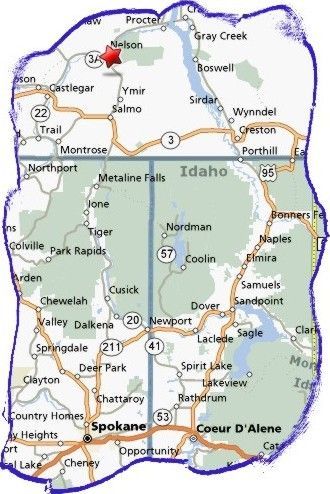
70 th Western International Forest Disease Work Conference Virtual Meeting Agenda
April 14-16 th , 2026
Tuesday,
April
14,
2026
Virtual
Meeting
Link
| Time
|
Event
|
Moderator
|
|
|
11:00- 11:10
(PST)
|
WELCOME,
INTRODUCTIONS,
&
LOGISTICS
|
Michael
Murray
|
|
|
11:10-11:30
|
KEYNOTE
– Dave Shaw – 2024 Outstanding Achievement Award Recipient, “Philosophy
into Plant Pathology”
|
Kristen Chadwick |
|
|
11:30-11
:40
|
BREAK
|
|
|
|
11:40- 12:50
|
University/Research Highlights
|
Brad
Lalande
|
|
| 11:40 – 11:50 |
Research overview of Hamelin Lab – Dr. Richard Hamelin, Department of Forest & Conversation Sciences, The University of British Columbia |
||
| 11:50 – 12:00 |
Microscale Genetic Variation and Single
Tree Population Structure of Arceuthobium tsugense
subspecies tsugense
–
Rachel Cook,
Department
of Forest & Conversation Sciences, The University of British Columbia |
||
| 12:00 – 12:10 |
Comparing the genomic basis for virulence
in pathotypes of white pine blister rust ( Cronartium ribicola
)
overcoming major gene resistance in western white pine ( Pinus monticola
)
and black currant ( Ribes nigrum
). –
Lydia Petersons,
Department
of Forest & Conversation Sciences, The University of British Columbia |
||
| 12:10 – 12:20 |
–
Hamelin Student,
Department of
Forest & Conversation Sciences, The University of British Columbia |
||
| 12:20 – 12:30 |
Population
genetic analysis of the most recent Phytophthora ramorum
invasion in Oregon's coastal forests
– Stephanie Chase, Department of
Botany and Plant Pathology, Oregon State University |
||
| 12:30 – 12:40 |
Host association and genetic
diversity of the genus Onnia in North America, and the development and
validation of a molecular tool for rapid detection of the species Onnia
tomentosa
–
Olivia Watson,
Department of Agricultural Biology, Colorado State University |
||
| 12:40 – 12:50 |
Assessing the drivers of ponderosa pine dieback and mortality – Michael McKee, Department of Agricultural Biology, Colorado State University |
||
| 12:50- 1:00 |
BREAK |
||
| 1:00-2:50 |
University/Research Highlights –
Continued
|
||
| 1:00 – 1:15 |
Uncovering interactions
between Armillaria solidipes
and fungal biocontrol agents
using transcriptomics
Ada Neupane, Department of
Agricultural Biology, Colorado State University
|
||
| 1:15 – 1:25 |
Associations
Between Soil Microbial Communities and Brown Spot Needle Blight Disease
Severity in Loblolly Pine Plantations
, Carolyn Cornell,
Department of Agricultural Biology, Colorado State University
|
||
| 1:25 – 1:35 |
Nursery environments shape rhizosphere microbiomes and pathobiomes of conifer seedlings used for wildfire reforestation – Grace Ganter, Department of Agricultural Biology, Colorado State University |
||
|
1:35
–
1:45
|
Discovery of Aspen Running
Canker in Utah
– Pavan Silva, Department of
Agricultural Biology, Colorado State University
|
||
|
1:45
–
1:55
|
ATMoS
:
Monitoring Airborne Threats to Tree Health in Conservation and Reforestation
Nurseries
– Almendra Astete Farfan, Department of
Agricultural Biology, Colorado State University
|
||
| 1:55
–
2:05
|
BREAK
|
||
| 2:05 – 2:15 |
Hidden players, unmasked drivers: Fungal
communities in conifer seeds
– Isabella Laughton, Canadian Forest Service
|
||
| 2:15 – 2:30 |
Heterobasidion in California: long-term
impacts, interactions with wildfire, and the potential for biological control
– Dr. Richard Cobb, Natural
Resources Management & Environmental Sciences, California Polytechnic
State University
|
||
| 2:30 – 2:40 |
Updated estimates of regional-scale tree
mortality caused by Phytophthora ramorum
– Delaney Siegmund, Natural
Resources Management & Environmental Sciences, California Polytechnic
State University
|
||
| 2:40 – 2:50 |
Research projection and overview
– Dr. Kelsey Tobin, Department
of Forest, Rangeland and Fire Sciences, University of Idaho
|
||
|
2:50-3:00
|
End of Day
|
||
Wednesday,
April
15,
2026
Virtual
Meeting
Link
| Event
|
Moderator
|
|||
|
11:00- 11:10 (PST)
|
WELCOME,
INTRODUCTIONS,
&
LOGISTICS
|
Brad
Lalande
|
||
|
11:10-11:30 |
KEYNOTE
– Rona
Sturrock – 2024 Outstanding Achievement Award Recipient, “Philosophy into
Plant Pathology”
|
Kristen
Chadwick |
||
| 11:30- 12:30
|
Panel
– Root Diseases
|
Brad Lalande
|
||
| 50-year effects of root removal and regeneration treatments on Armillaria root disease mortality– Rachel Brooks, Washington Department of Natural Resources |
||||
| 11:50 – 12:10 |
Stump removal and species admixture interact and affect yield of plots infected with Phellinus and Armillaria root diseases 55 years after control. – Mike Cruickshank, Canadian Forest Service |
|||
| 12:10 – 12:30 |
Disease resistance program (port orford cedar) – Dr. Richard Sniezko, US Forest Service, Dorena Genetic Resource Center |
|||
|
|
||||
|
12:45-1
:30
|
Rust
Committee Meeting
|
Jane Stewart
|
||
|
12:45 – 1:00
|
White pine blister rust spore trapping SW Rocky Mountains and
Northern Rockies
, Kelly Burns, Colorado State University
|
|||
|
1:00 – 1:15
|
Genomic
evidence of hybridization and introgression between two forest rust pathogens Cronartium ribicola
and Cronartium comandrae
, Shankar Gaire, Colorado State
University.
|
|||
|
1:15 – 1:30
|
Round
Robin/Discussion
|
|||
|
1:30-1:45
|
BREAK
|
|||
|
1:45-2:45
|
Panel
– Foliar
Diseases
|
Brad Lalande
|
||
|
1:45 – 2:05
|
Predicting the spread of Fusarium dieback - invasive shothole
borers in California –
Dr. Shannon Lynch,
Department of Plant Pathology,
University of California Davis
|
|||
|
2:05 – 2:25
|
A host-based culture medium for pathogenicity assays in Nothophaeocryptopus
gaeumannii
–
Cristian González,
College of Forestry, Oregon State
University
|
|||
|
2:25 – 2:45
|
Traits associated with lodgepole pine resistance to dothistroma
needle blight –
Dr.
Jonathan Cale,
Department of
Ecosystem Science and Management, University of Northern British Columbia
|
|||
|
2:45-3:00
|
End of Day
|
|||
Thursday,
April
16,
2026
Virtual
Meeting
Link
| Time
|
Event
|
Moderator
|
||
|
11:00- 11:10
(PST)
|
2025/26 Outstanding Achievements/ Welcome
|
Kristen
Chadwick
|
||
|
11:10-11:30
|
KEYNOTE
– Blakey Lockman – 2023 Outstanding Achievement Award Recipient,
“Philosophy into Plant Pathology”
|
Kristen Chadwick |
||
|
11:30-11
:40
|
BREAK
|
|
||
|
11:40-1 2:40
|
Panel
– Special Papers
|
Brad
Lalande
|
||
| 11:40-12:00 |
Variation among western redcedar provenances in resistance to butt rot caused by Coniferiporia weirii revealed through artificial inoculation – Mike Cruickshank, Canadian Forest Service |
|||
| 1200-12:20 |
Western redcedar dynamics in Washington and Oregon based on 20 years of consistent monitoring data from the USDA Forest Inventory and Analysis – Andrew Yost. Oregon Department of Forestry |
|||
| 12:20-12:40 |
An Overview of the ʻŌhiʻa Disease Resistance Program in Hawaiʻi – Marc Hughes, US Forest Service, Dorena Genetic Resource Center |
|||
|
12:40-12:55
|
BREAK
|
|||
|
12:55-1:30
|
Panel
– Special Papers - Continued
|
Brad Lalande
|
||
| 12:55-1:15 |
Detection of tree wilt pathogen in the
Pacific Islands: The case of Ceratocystis wilt in Palau’s endemic udeuid
tree–
Mee-Sook
Kim, US Forest Service, Pacific Northwest Research Station |
|||
| 1:15-1:30 |
Climate-Driven Wood Degradation: The
Fungal Community Composition of Ascomycota and Basidiomycota in
Disturbance-Affected Boreal Tree Species–
Nadya Citra, University of Alberta
|
|||
|
1:30- 2:30
|
Business Meeting
|
|||
|
2:30-3:00
|
Adjourn
|
Michael
Murray
|
||
Committees:
-
Climate Change Write a description for this list item and include information that will interest site visitors. For example, you may want to describe a team member's experience, what makes a product special, or a unique service that you offer.
-
Dwarf Mistletoe
-
Foliage and Twig Diseases
-
Hazard Tree
-
Nursery Pathology
List Item 1 -
Root Disease
List Item 3 -
Rusts
List Item 2